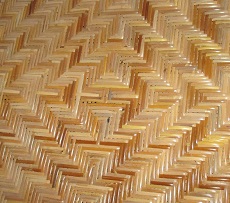
Three antique French chairs arrived by taxi and were handed into my care. Pretty and delicate, two of the frames and one of the seat frames needed some regluing to stabilize them before the caning could begin. I used our trusted Bessey clamps for the former and a strap clamp for the latter and standard carpenters glue.


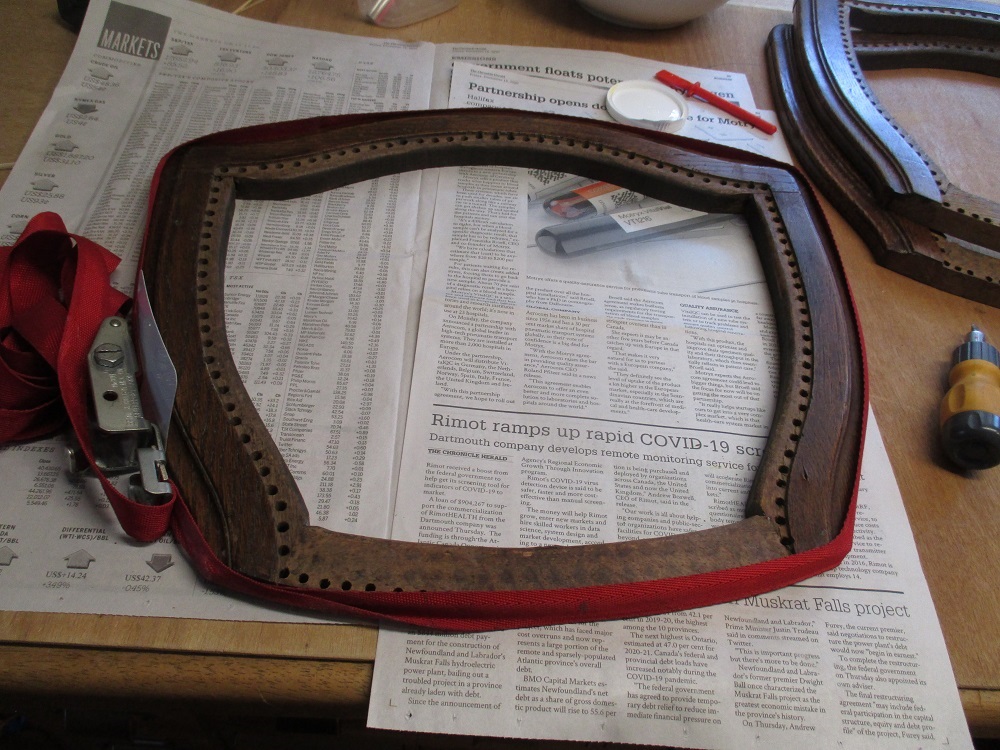
Weaving one hundred and twenty-two holes with 2mm cane is a time-consuming task as the cane is so fine it tends to snap if not treated with gentle hands. Multiplied by three seat frames and it’s a monumental job. I don’t dare count the hours it takes or I’d be too depressed.
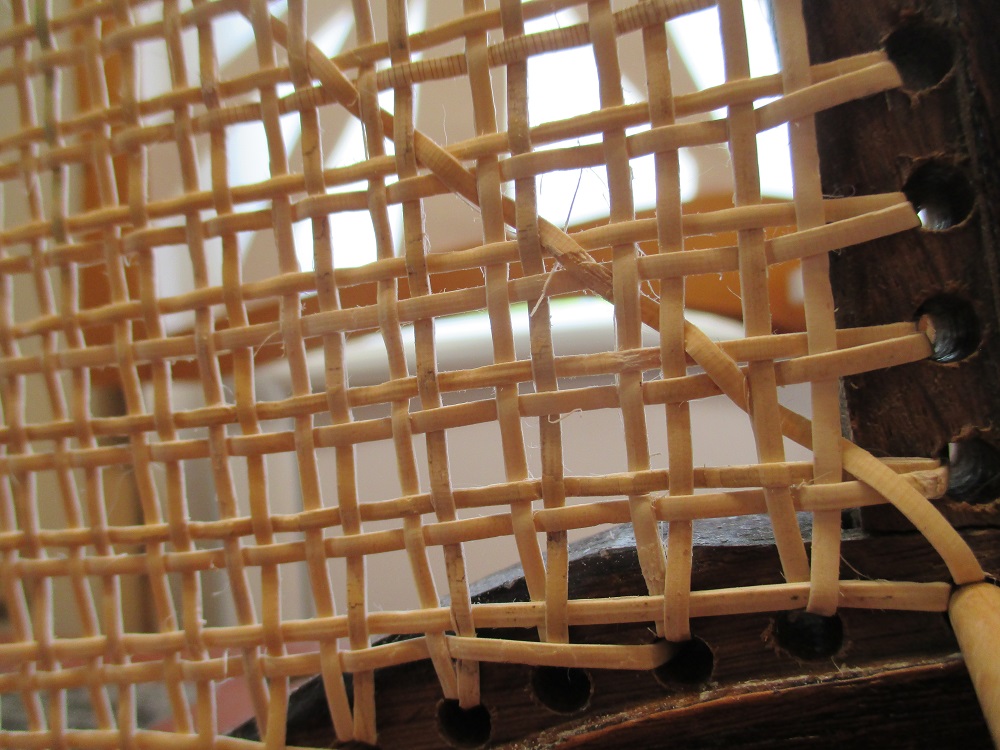
The weaving of this design of seat is a six-step process which you can see in the following photographs. The first three layers are alternated and then the weaving begins with the fourth.
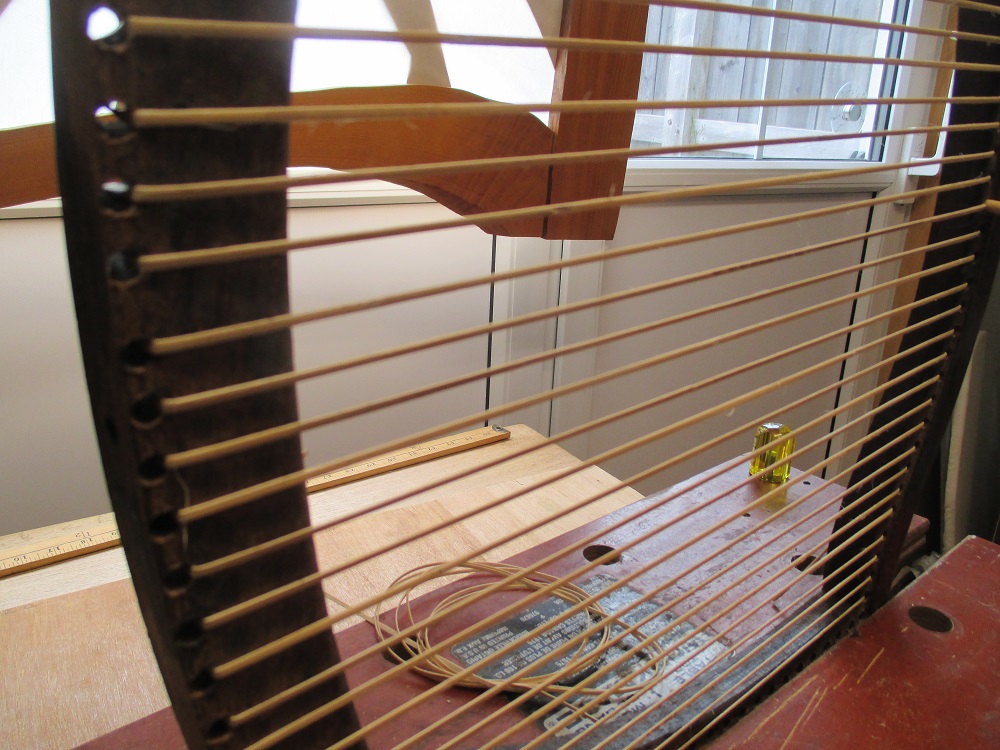
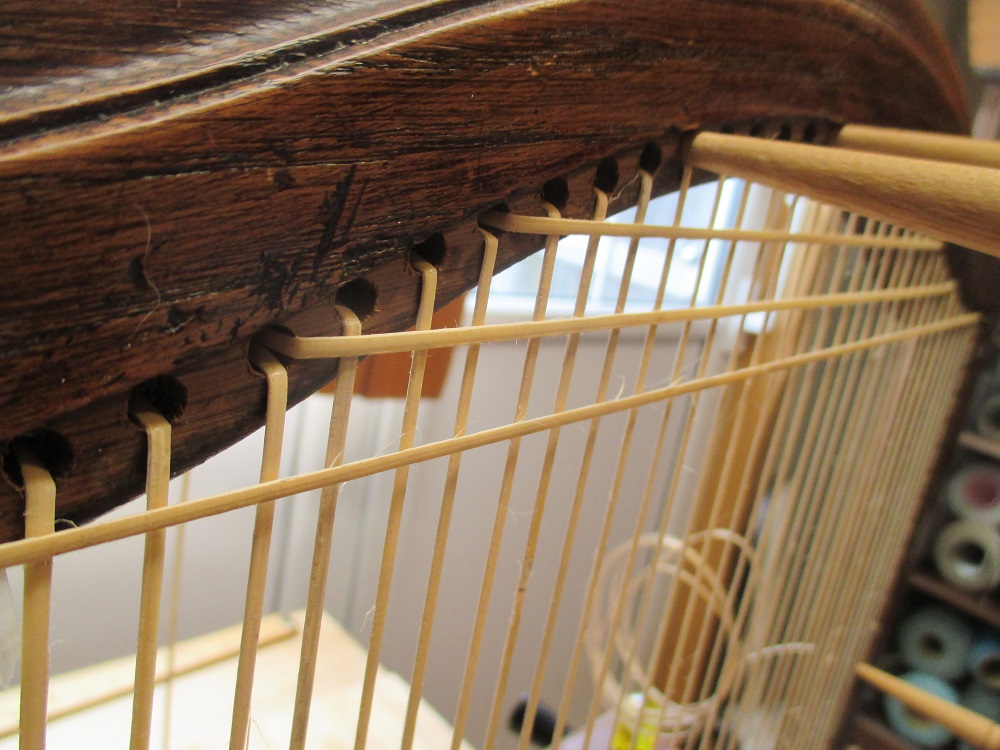
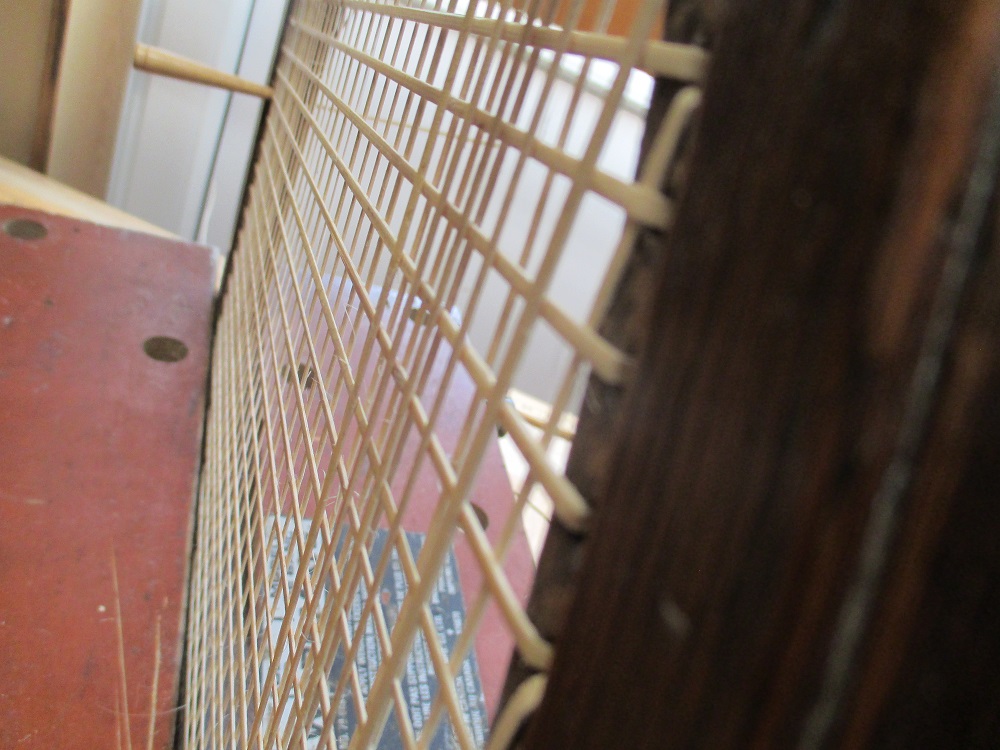

The fifth and sixth are woven diagonally locking the horizontal and vertical indices. There is a particular way they must be integrated so that they lay flat and smooth and the plan is to make X’s at each frame hole.
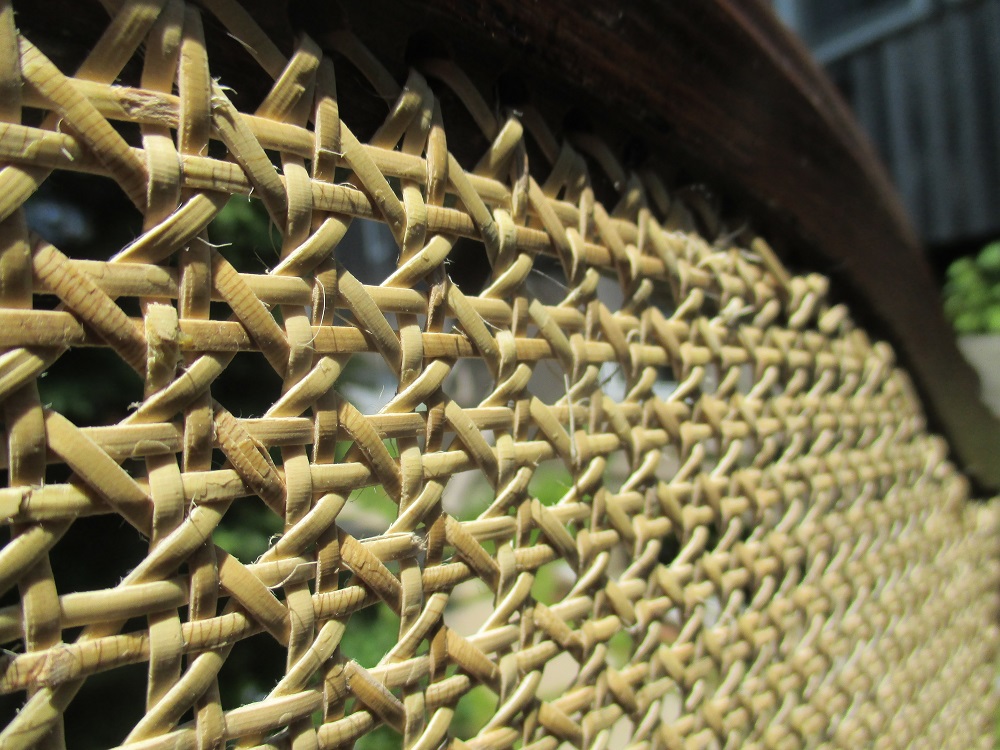
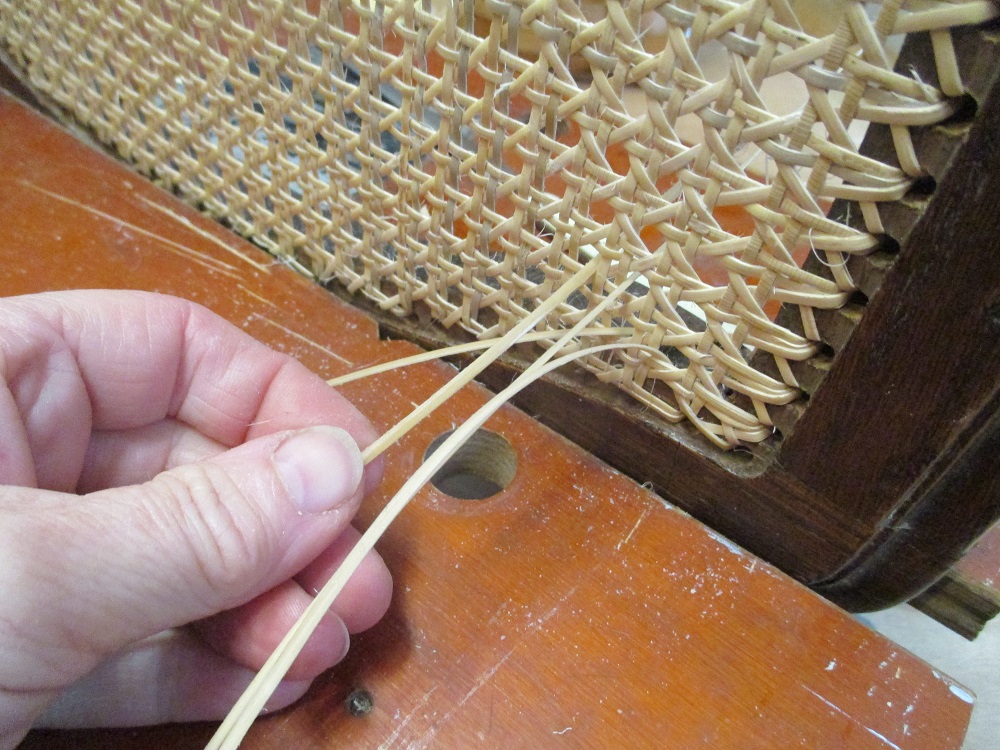
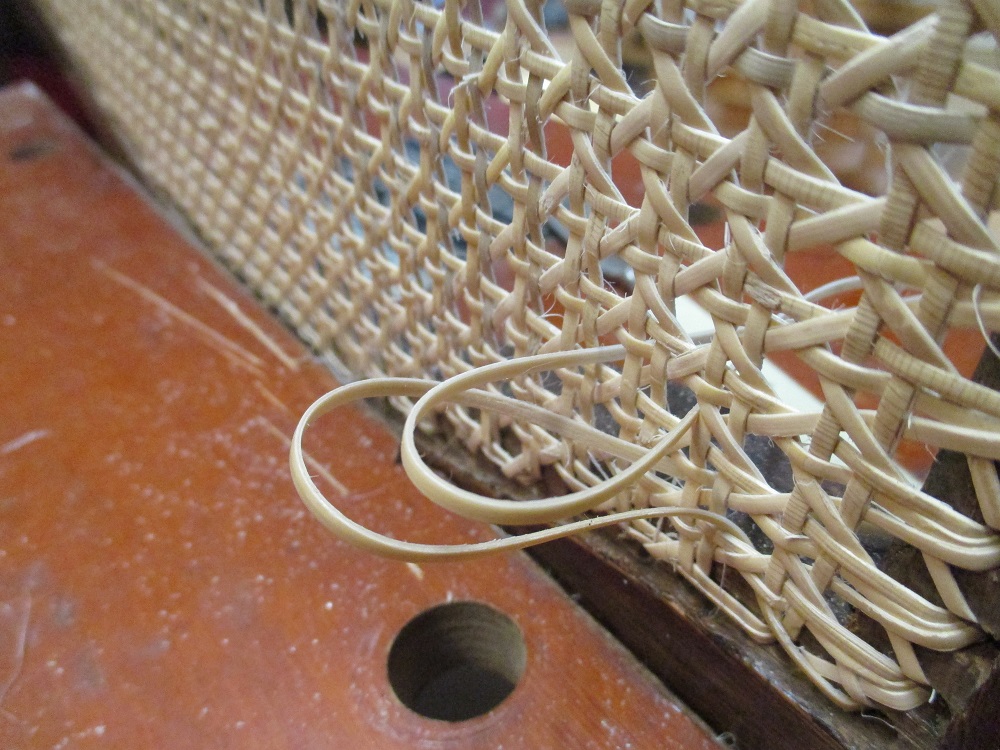
I used a 3.5 mm cane to cover the holes in the frame, lacing it in place with 2 mm cane. During the whole procedure, the cane must be presoaked and then kept moist with a wet cloth as the strands are worked through. This helps to keep it pliable and makes it easier to untangle.
The caned seats were then stained with Mohawk Medium Walnut and coated with Shellac to match the chair backs. Finally, the chairs were reassembled.
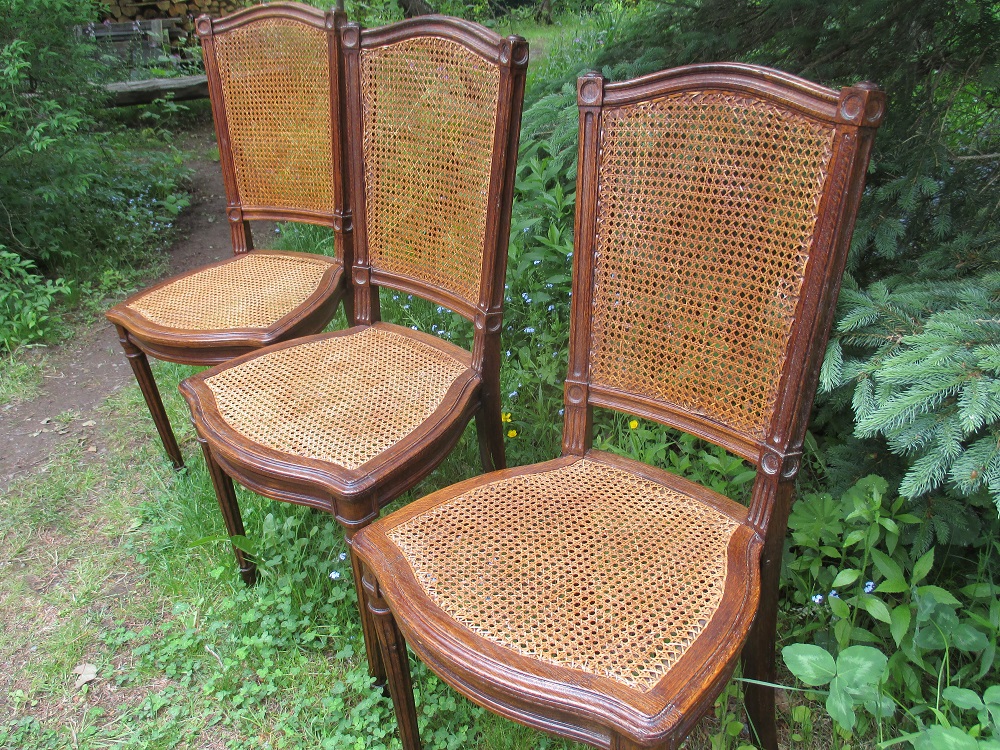
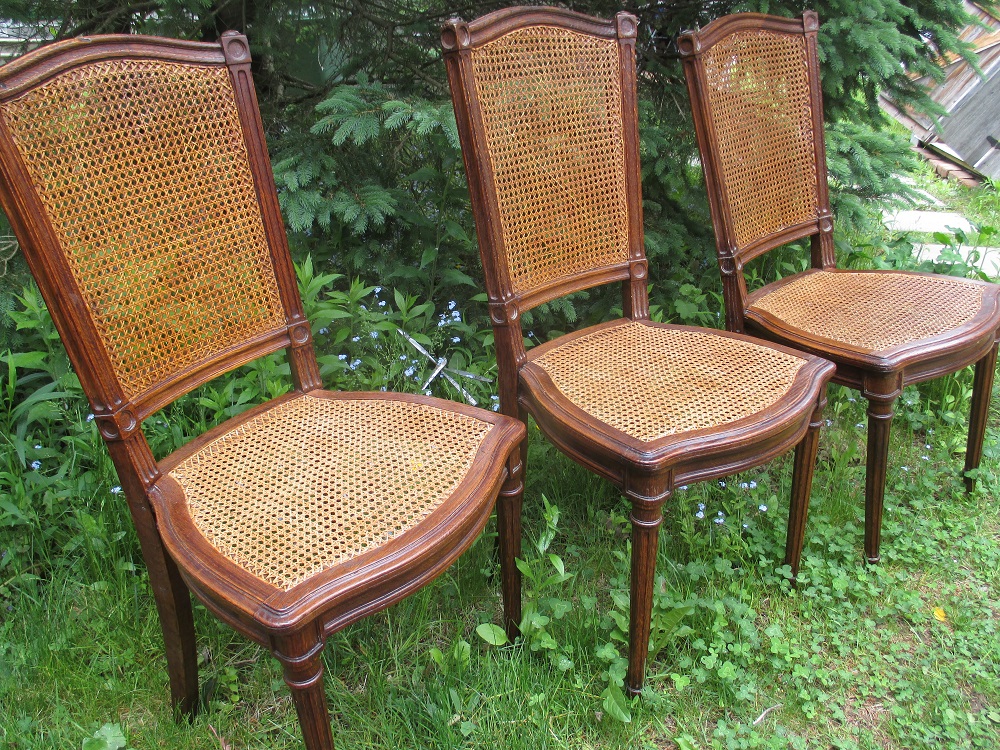
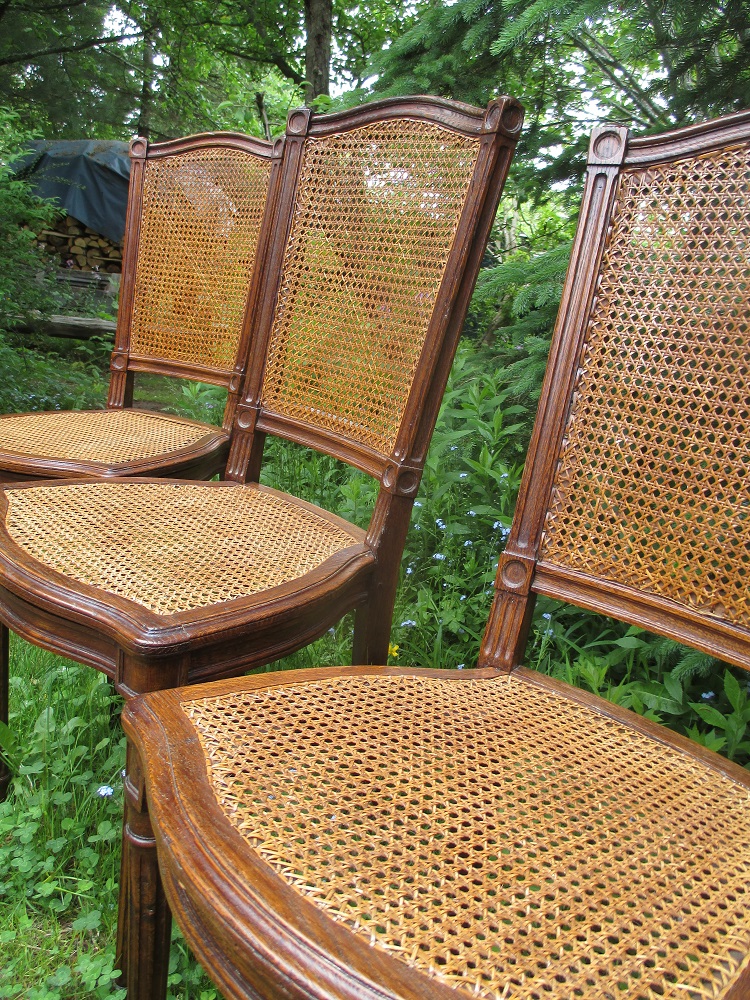
Tommy-Two-Stroke helped for many hours.

 Woodside Workshop